Legal Industry Survey Results 2020

Highlights and Observations

Girl Using Laptop

This article looks to examine the results of our 2020 Legal Industry COVID-19 Survey. Our insights are part of a national survey conducted in collaboration with two other legal recruitment firms based in NSW and Victoria. We had 424 respondents at a national level. 

We asked a range of questions about working from home, employee satisfaction, the future of working arrangements and more. The results of this survey can inform us how employers have handled COVID-19 and how people are feeling about the future of their work. 

We surveyed the Queensland legal industry in August 2020. Most of those were found to be working in law firms with less than 100 employees (32.58%). Just over 20% came from firms with more than 300 staff and the fewest (3.3%) were working in-house within the Not-for-Profit sector. The remaining respondents were those working in government, corporate and mid-sized firms. There was a relatively even split across practice areas. 

Workload

We asked people how COVID-19 had affected their workflow. There was an equal proportion of people who said they were busier to those who stated a reduction in workload. Those who had experienced a reduction in workflow were mainly in corporate and commercial litigation followed by property. It is likely that the government’s six-month suspension of insolvency laws in March, (now extended to December) may have played a part in the decrease in the flow of litigation.

Hours Worked and Impact on Pay

While most people said that neither their hours nor their pay had changed because of COVID-19, 20% were working longer hours and 25% were either stood down, made redundant or had their working hours reduced by at least 1 or 2 days per week and experienced a drop in pay.

Working from Home

We surveyed people in August after the height of restrictions in Queensland during March and April. By August, 37.5% of people were working full-time in the office, followed by a mix of work from home and in the office (34.09%) with the fewest respondents working only from home (28%). For those who have long advocated the benefits of working flexibly and remotely, COVID-19 has most certainly sparked a welcomed ‘working from home’ revolution. In fact, it has forced some of the most conservative of employers to think differently about the way their workplaces can look and operate.

The Impact on Productivity


90% of people said they were as productive if not more productive working from home.


Without the usual distractions of passing foot traffic, and the “do you have a second….” and the resulting fire-side chats, those surveyed were just as productive, if not more. What we won’t know however, is whether higher levels of productivity led to strong fee recovery and profitability. 


Long-held views of presenteeism in the office being the only means of a productive workplace are definitely being challenged.


Lifestyle Factors

We asked people about the effects of working from home on lifestyle factors including exercise, sleep quality, mental health, eating habits, alcohol intake and relationships.

Interestingly, lifestyle factors due to WFH have largely stayed the same for people and in fact improved in the areas of exercise and mental health. The overwhelming majority of people who felt their mental health and exercise had improved are working a mix of from home and in the office.

Mental health was the most disproportionately effected of all the lifestyle factors.

We saw a positive improvement in mental health due to WFH. Most people who said their mental health had improved also saw improvements or continuity in the other lifestyle factors.

However, mental health was the most negatively affected of all lifestyle factors. 20% of people felt their mental health worsened. All but one of the respondents who said their mental health had worsened, were either impartial or satisfied with how their employer has handled COVID-19.

People’s ability to reinvest their time due to working from home has correlated with an improvement in lifestyle factors. In a 2019 survey, the average daily commuting time for Brisbane was 67 minutes.[1] It would seem that people are reinvesting the time that would otherwise have been spent on a commute.

We saw an improvement in exercise and consistent eating and sleeping routines. Interestingly, 72.9% of people said their alcohol intake was the same.

Yet another silver lining of working from home is the chance to spend more time with family and loved ones. Not surprisingly relationships had the greatest positive result out of all the lifestyle factors.

All lifestyle factors were overwhelmingly positive, and most people were not any worse off because of working from home.

How Businesses Have Handled COVID-19

Most people felt their employer has done an awesome job handling COVID-19 with a minority of people not satisfied (12.36%).

From our own experience in speaking with job seekers, employers are being judged on how they are handling COVID-19. The way in which employers manage and navigate these ‘challenging times’ will be long remembered whether positive or negative. Taking the ‘if they don’t like it, they can leave’ approach speaks volumes about the underlying philosophies of a firm. Poor management practices including those of ‘command and control’ will come back to haunt those who have relied on this approach, particularly when they come to bolster their teams once again.

Those who were unsatisfied with how their employer has handled COVID-19 within their organisation pointed to communication, lack of clarity, and poor management. Most of these people said they will consider looking for a new position.

Culture has stayed the same with 25% seeing an improvement and 22% feeling it has worsened.

There has been no change in communication for most people. 29% saw an improvement in communication. Less than 10% found that communication has been less effective.

People have been finding new ways to connect and continue that critical interaction amongst colleagues. Whether businesses are using Zoom, Microsoft Teams, Skype, Blue Jeans, or Slack; the ease of communication online has enabled different ways work relationships are established and maintained. The elimination of travel time to and from meetings, may also be a contributor to an improved level of efficiency and productivity as people jump from one meeting to the next.

Expectations around employee accessibility through online communication was flagged. A respondent noted the downside of communication channels creating an expectation of availability outside work hours.

Most people are not concerned about job security. This is a positive result but by a small margin - 55% are not concerned while 44% are. Most people who are concerned about job security also experienced a reduction in workflow.

The Future of Work

Almost 35% of those surveyed stated that their employers have already communicated a ‘full-time’ in the office arrangement, while 44% of people will enjoy a mix of working from home and in the office. At the time of the survey there was just over 20% who were still waiting for their firms to communicate a ‘return to work plan’.

Most returning to the office said they will drive to work. Whether the increase in time spent commuting erodes improvements in lifestyle factors may be tested over time.

The ideal working situation is a hybrid model of working from home and the office. Ideally, people want to be working from home 1-2 days a week.

In recent months, we have seen an increase in the number of job seekers looking to move into workplaces where a hybrid model of working exists and is genuinely supported. It is a trend that we expect to see continue, and one that may become a deciding factor for future talent.

Clichés about ‘adapting the way we work in a technological era’ or chasing ‘work-life balance’ seem to fit nicely into the picture here. Our temperature check on the legal market shows that overall, we have continued to communicate well online, enjoyed a surprising level of productivity while working remotely, spent time with loved ones, and for the most part have been satisfied with how our employer has handled COVID-19. Our ‘new normal’ is most certainly still evolving, but if these early indicators suggest anything, it is that law firms have adapted far quicker than the broader profession may have ever expected.

Now the question on everyone’s mind is, how much of these new adaptations will exist well beyond a post-COVID world?

 [1] HILDA - https://www.sbs.com.au/news/australian-city-workers-average-commute-has-blown-out-to-66-minutes-a-day-how-does-yours-compare

Click below to download the full report.

Related Articles

By Alex Correa May 7, 2026
In this article we discuss the challenges Queensland lawyers have in positioning themselves for a career transition. Discover why clarity and moving with strategic intention towards a long-term goal is always going to get a superior outcome compared to reactively aiming for a “better job.” As Queensland-based legal recruiters placing lawyers across private practice, government and in-house roles, we have one consistent observation: most lawyers don’t struggle because they lack capability. They struggle because they lack clarity. The Queensland market is competitive. There are numerous available roles across private practice, government and corporate. What there isn’t, in equal supply, is talent that can clearly articulate its value. Our team regularly meets with strong lawyers who have solid experience, good technical skills and respected firms on their CV. Yet when we talk about a career move, they can’t quite explain what makes them different, where their real strengths lie, or how their background positions them for the role they want next. Their CV lists matters. They describe tasks. They outline chronology. But hiring decisions are not based on task lists. They are based on your clearly articulated value. The Market Is Fluid. Your Career Doesn’t Have to Be Linear. In the last decade in Queensland, we’ve seen far more fluidity than ever in legal careers: ● Private practice lawyers moving in-house. ● In-house lawyers returning to private practice. ● Government lawyers stepping into corporate roles. ● Commercial litigators using their experience as a stepping stone into construction. ● Senior lawyers recalibrating into more specialist streams. There is no longer a single, linear path. And there is nothing wrong with that. Where we often find problems arise is when a move is reactive rather than deliberate. When lawyers move purely for title, salary or flexibility, misalignment often follows. It might feel like a step up on paper, but if the scope, influence and mandate aren’t there, it won’t deliver long-term progression. The best career moves are intentional. They build on your strengths, expand your scope and shape your longer-term trajectory. If you are considering moving, don’t just move away from something. Move toward whatever that ideal role, goal or stepping stone might be. The Common Thread: It’s Not Capability. It’s Clarity. At every stage of a legal career, the challenge shifts: Early career lawyers struggle to gain exposure in a competitive graduate and junior market. Mid-career lawyers sometimes struggle with differentiation. After several years in private practice, what sets you apart? Is it your specialisation? Client exposure? Technical depth? Industry insight? Senior lawyers often struggle with trajectory. Where is this leading? Partnership? General Counsel? A sector pivot? A broader mandate? The common issue across all levels is clarity. Can you articulate what you are genuinely good at? Can you describe where you consistently add value? What kind of problems do people trust you to solve? One of the most useful exercises our team often suggests to candidates is to undertake a mini skills audit. Go back to your performance reviews. What skills do supervisors consistently praise? What themes show up? What feedback do you get from clients or colleagues? Sometimes your “superpower” feels mundane to you. Perhaps you are exceptional at managing clients and are only early in your career. Or maybe you thrive in complex contractual negotiations. Or you have an instinctive talent in building trust with executives. Because talent comes naturally, you may not realise how valuable it is. The market does not reward potential. It rewards clearly articulated value. Title Is Not Strategy. Scope Is. In recent months, I’ve spoken with several senior lawyers wrestling with their titles. An insufficient title for a significant role. Or an inflated title with a lower salary. A “Legal Counsel” title attached to what is effectively a General Counsel mandate. Or conversely, a “General Counsel” title with limited influence and no strategic seat at the table. Title can matter in a legal career. But title does not determine seniority. Scope does. Influence does. Reporting lines do. A big title without a mandate is not career progression. When considering a move, we recommend that you ask: ● Who will I report to? ● What is the scope of responsibility? ● How does this position shape my longer-term positioning? ● What type of business decisions will I influence? Sometimes part of our roles as specialist legal industry recruiters is educating corporate clients on these distinctions and how they relate to role titles. Sometimes, we find ourselves helping lawyers see beyond the title. Storytelling Is a Strategic Skill One of the biggest gaps we often see is in how lawyers present themselves. Most CVs read like this: ● Acted for… ● Advised on… ● Drafted… ● Assisted… But hiring decisions are not based on lists of tasks. They are based on narrative. What problems did you solve? In what environment did you thrive? What patterns show up across your career? Where did you create a measurable impact? Instead of saying: “Advised on commercial contracts.” Consider: “As Senior Legal Advisor for a multinational expanding into a new market, I led the redesign of their commercial contracting framework, reducing risk exposure and accelerating deal turnaround by 20 percent.” That is a commercial story. It shows context, challenge, role and impact. Storytelling is not a soft skill. It is a strategic skill. When you position yourself well, you become the chief storyteller of your own career. Your LinkedIn profile, your CV and your cover letter should reflect that narrative. Unless you are applying for truly vanilla roles, don’t write a vanilla CV. Transferable Skills: Often Undersold Lawyers frequently underestimate the portability of their strengths. Private practice lawyers often underplay: ● Their commercial exposure. ● Their resilience under pressure. ● Their client management capability. ● Their ability to operate in high-performance environments. In-house lawyers often underplay: ● Their proximity to executive decision-making. ● Their enterprise risk perspective. ● Their cross-functional influence. ● Their ability to align legal advice with commercial realities. An in-house lawyer who understands the business’s risk appetite and can bring together sales, operations and executive teams has far more than “stakeholder management” experience. They have strategic influence. But these strengths are only useful if you can articulate them in language that hiring managers understand. Technical skills might get you shortlisted. Strategic clarity gets you appointed. Alignment Is a Two-Way Responsibility Before you apply for a new role, ask yourself: Do I genuinely want this role? Does it align with my strengths, life stage and ambitions? Have I researched the firm or organisation properly? Do I understand their client base and culture? Alignment is not just the employer’s responsibility. It is yours as well. The in-house market in particular is increasingly competitive. We regularly see three-way competition: ● Private practice lawyers wanting to move in-house. ● In-house lawyers moving laterally. ● In-house lawyers competing for step-up roles. The “grass is greener” narrative doesn’t always hold. In-house can be just as demanding. Salaries can plateau. Expectations can grow as internal dependencies increase. Clarity about what you want, and why, is critical. The Magic Moment In conversations with candidates, my team often finds that there is often a moment when their eyes light up. When they talk about client engagement. Or untangling a particularly complex contract. Or navigating a difficult regulatory environment. It is that moment that tells us something important. It tells us where their energy is. Where they naturally add value. Where their longer-term narrative might lie. When we join those dots, positioning becomes easier. Intentional Careers Win Our role in recruitment is not just to introduce lawyers to opportunities. It is to help them uncover and refine the commercial narrative in their careers and to help them make strategic and intentional moves. Sometimes the most valuable advice we give is, “this is not the right role for you”. Movement for movement’s sake is not strategy. A better job is not necessarily a bigger title or a higher salary. It is a move that aligns capability with opportunity and builds toward a defined end goal. If you are considering a transition, whether it be private practice to in-house, in-house back to private practice, government to corporate, or into a more specialised stream, start here: Understand your value. Articulate it clearly. Ensure the move aligns with your long-term trajectory. When you do that, you compete better. You transition better. And you build a career that is intentional, not reactive. If you are unsure what your next step should be, or how to position yourself effectively in this Queensland market, get in touch. Sometimes clarity is the only missing piece. Are you looking for your next ideal step in the legal market? Reach out to find out how my team at Alex Correa Executive can help you build the career you aspire to. Get in touch here .
By Alex Correa April 29, 2026
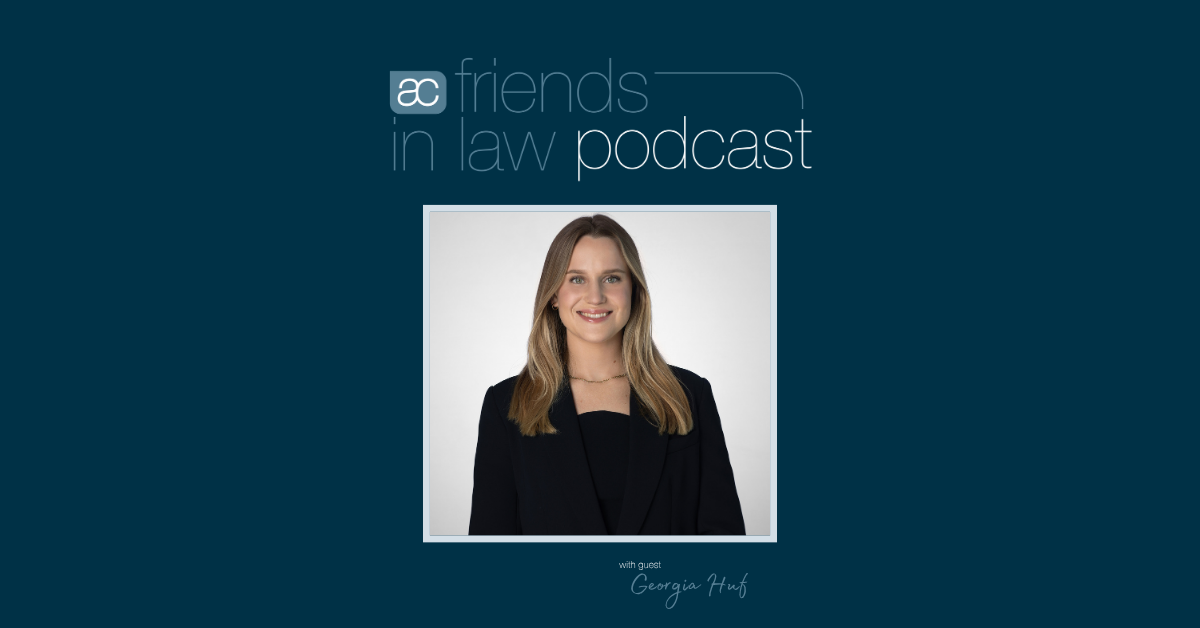
What does a fulfilling legal career actually look like when you’re in it, not just planning it? In this episode of Friends in Law, Alex sits down with Georgia Huf for a conversation about career uncertainty, non-linear paths, and the decisions that quietly shape where you end up. Georgia shares how she didn’t set out to study law, why her early exposure to the profession through recruitment changed the way she thought about “fit”, and how she found her way into projects and construction law, an area most law students don’t even realise exists. They talk about the reality of starting out in top-tier firms, navigating imposter syndrome, and learning that perfection isn’t the goal. Instead, it’s about curiosity, relationships, and being willing to try things before you feel ready. The conversation also explores what it means to build a career without a fixed plan. From working with barristers and mentors, to making the decision to move overseas early in her career, Georgia reflects on the moments that required her to trust her instincts, even when the path wasn’t clear. Together, Alex and Georgia unpack the idea that there is no single way to “do” a legal career. They discuss why culture and people matter just as much as the work, how exposure to different areas shapes better lawyers, and why some of the most rewarding paths are the ones you didn’t initially consider. Georgia also shares what surprised her most about practicing in Abu Dhabi, the pace and scale of projects work, and why saying yes to a single LinkedIn message can sometimes open doors you didn’t know existed. If you’ve ever felt unsure about your direction, questioned whether you’re making the “right” decisions, or felt pressure to have everything figured out early, this episode is a reminder that you don’t need a perfect plan to build a meaningful career. Enjoyed the podcast? Share and Enjoy! Please don't forget to leave a rating via Apple Podcasts Never miss a drop by subscribing on Apple Podcasts or Spotify If you want to talk about your career in law reach out to us here Or why not connect with Alex on LinkedIn Credits Host : Alex Correa - Career Coach in Law Brought to you by Alex Correa Executive With thanks to our guest : Georgia Huf Friends in Law is edited and produced by Dayera Creativ e
By Alex Correa March 19, 2026
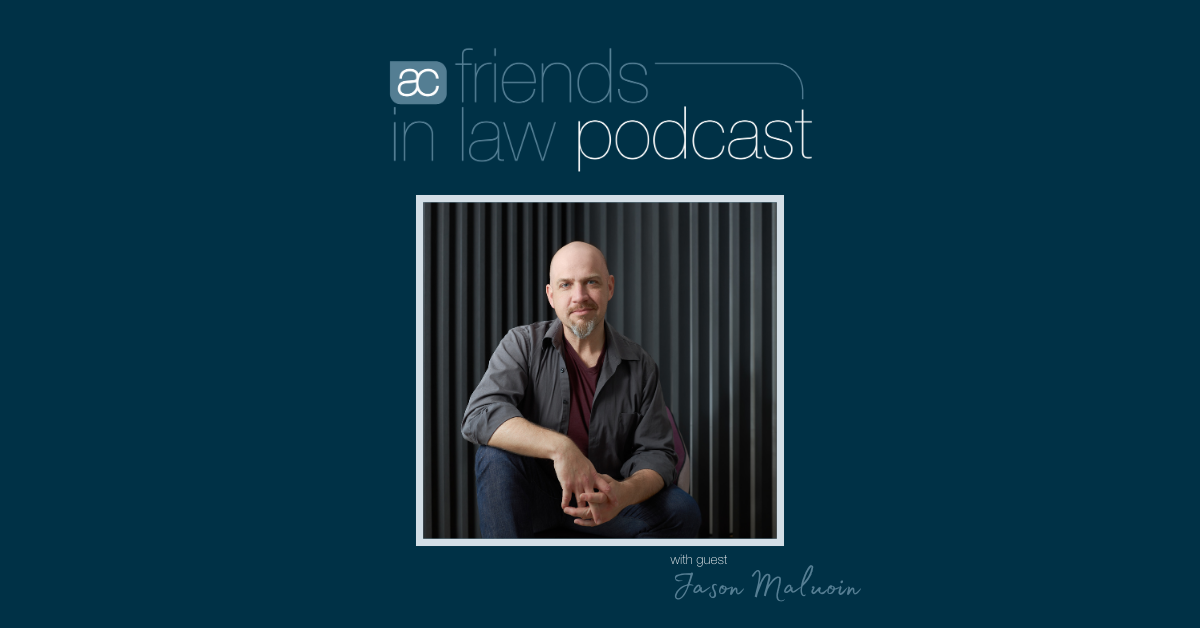
What makes someone choose you when there are ten other people offering the same service? In this episode of Friends in Law, Alex sits down with Jason from Superpower Portraits for a conversation about branding, belief, differentiation, and why trust is not something you manufacture, but something that grows when you remove uncertainty. Jason shares how one awkward meeting in Dubai forced him to confront a hard truth. He knew his work mattered, but he couldn’t clearly explain why. That moment sent him down a much deeper path, figuring out how to communicate not just what he does, but what sits underneath it. The values, beliefs, and personal convictions that make someone’s work feel distinctive rather than just competent. Together, Alex and Jason explore what this means for lawyers, especially in a profession where so much communication sounds polished, credible, and technically strong, but often feels interchangeable. They unpack why credentials and expertise are only the baseline, how lawyers can communicate the human outcome of their work, and why the strongest professional brands are built not on performance, but on clarity. From client relationships and interviews to bios, websites, and personal positioning, this episode is a thoughtful look at what it really means to connect with people in a way that feels honest, memorable, and aligned. Jason also shares why he thinks confidence is overrated, why “trusted advisor” is not the goal, and how asking better questions about belief, identity, and feeling can completely shift the way you talk about your work. If you have ever struggled to explain your value without sounding rehearsed, overly polished, or like everyone else in your field, this conversation is for you. Extra Links Identity Alchemy - https://bit.ly/4rIbKay Vision & Values Alignment Guide - https://bit.ly/3OjzjYR Small Hinges Swing Big Doors - Behavioural Branding 'Swipe File' - https://bit.ly/4tJHGxk 5 Powerful Habits that Attract Fully Aligned Clients - https://bit.ly/4bJSNzL 13 Questions to Ask When Hiring a Photographer (beyond "What does it cost?" and "What do I get?") - https://bit.ly/4qxwhh8 Topics Personal branding for lawyers Trust and credibility Lawyer bios and LinkedIn profiles Differentiation in professional services Client connection and communication Brand positioning Identity, belief and values Authenticity in legal careers Professional storytelling Career development in law Enjoyed the podcast? Share and Enjoy! Please don't forget to leave a rating via Apple Podcasts Never miss a drop by subscribing on Apple Podcasts or Spotify If you want to talk about your career in law reach out to us here Or why not connect with Alex on LinkedIn Credits Host : Alex Correa - Career Coach in Law Brought to you by Alex Correa Executive With thanks to our guest : Jason Malouin Superpower Portraits Friends in Law is edited and produced by Dayera Creativ e
By Alex Correa February 3, 2026
As both the younger sister and trusted colleague of ACE’s Founder and Director, Alex Correa, Jen works closely with Alex, our Senior Recruitment Consultant, to uphold the high standards of service, care, and insight that ACE is known for.
By Alex Correa December 23, 2025
Welcome to this month’s edition of Alex Advocates. My name is Alex Correa and I‘m a Brisbane based Legal Industry recruiter, and the Founder of Alex Correa Executive . In this newsletter, I talk about how AI is changing the nature of the legal industry and whether its prevalence is likely to further influence agism in the legal profession. Find out what Queensland’s market is currently telling us here. I spent some time in late November in Sydney at the NPAworldwide Power Up conference where many of the professional development sessions related to the future of work, how Gen AI will impact jobs, careers and industries and uncovering the tips and pitfalls of AI utilisation in recruitment processes. It was an exciting couple of days, full of optimism and possibilities and it nicely tied in with conversations I’ve been having with candidates and clients in the most recent weeks. In Ross Clennett , FRCSA 's presentation about “The disrupted future of how Gen AI will impact jobs, careers, industries and the recruitment industry”, one graphic stood out to me. It was Indeed’s research on the impact of AI on skills at work . Ross has nicely summarised the findings in this graph demonstrating roles that require physical labour increase in demand and those that are more cerebral decline. 
By Alex Correa November 5, 2025
In this newsletter, I talk about the how influence is changing in the legal industry in Queensland and how your approach and style can significantly impact the success of your career.
By Alex Correa October 10, 2025
Explore a legal career that shapes the State. Crown Law’s Constitutional Law Team tackles varied, high-profile matters at the heart of Queensland’s governance.
Three candidates waiting to be interviewed.
By Alex Correa September 18, 2025
As legal recruiters, we see it far too often: talented lawyers who take themselves out of the running for roles before they’ve even applied. It happens across genders, though our consultants often hear it more from women who feel they need to tick every box on the selection criteria before pressing “submit.”
Happy lawyer
By Alex Correa August 9, 2025
Thinking about moving from private practice to in-house legal? Discover the skills, mindset, and preparation needed to make the shift successfully in Queensland.
Lawyer advising team
By Alex Correa August 9, 2025
Discover how the General Counsel role in Queensland has evolved into a strategic business leadership position, and what to look for when hiring one.
More Posts